|
| |
|
A
Suffolk village, home to the earliest Aldous family on record |
| Village History |
|
The village of Fressingfield is
situated in the Waveney Valley, north Suffolk and dates back to 1086 when it
was known as Fessefelde. The name is derived from the Old English 'Fyrsenfield',
translating to a firze-covered field.
The most famous son of Fressingfield was William Sancroft (1617 - 1693).
He was Dean of Emmanuel College Cambridge and Dean of St. Paul's where he
oversaw Wren's re-building after the Great Fire of London. William
Sancroft, as Archbishop of Canterbury showed strong allegiance to James 11
and was disposed, returning to Fressingfield in 1690 where he provided
support for local education and charities for poor children.
|
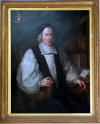
William Sancroft
click image to
enlarge |
|
Fressingfield Parish Church |
|
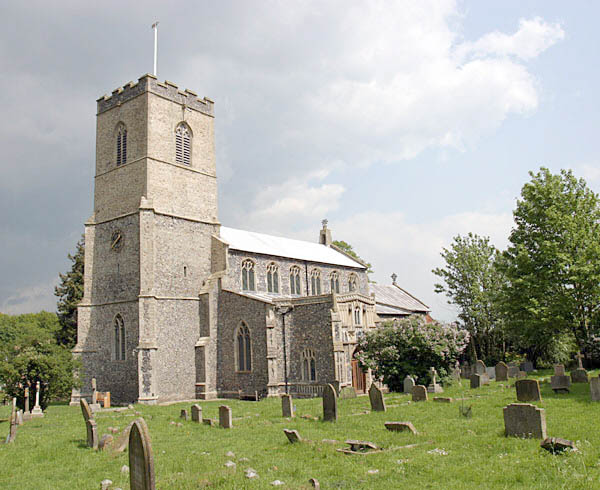
The parish church of St. Peter
and St. Paul in Fressingfield, built
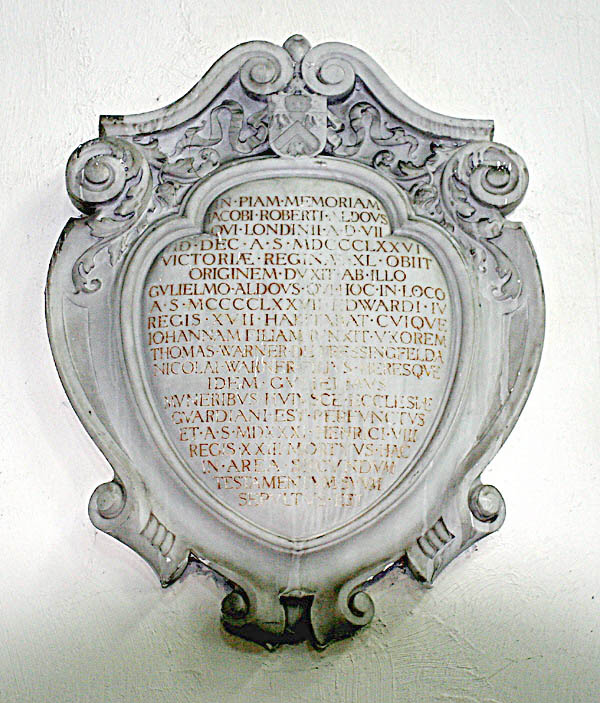
around 1320. It has a memorial plaque on the wall bearing the
name of a Jacob Robert Aldous of London and is dated 1876. The plaque has an
inscription in Latin and is dedicated to
our earliest known ancestor
William Aldous and his wife Johane.
The church is particularly noted for its wood carvings.
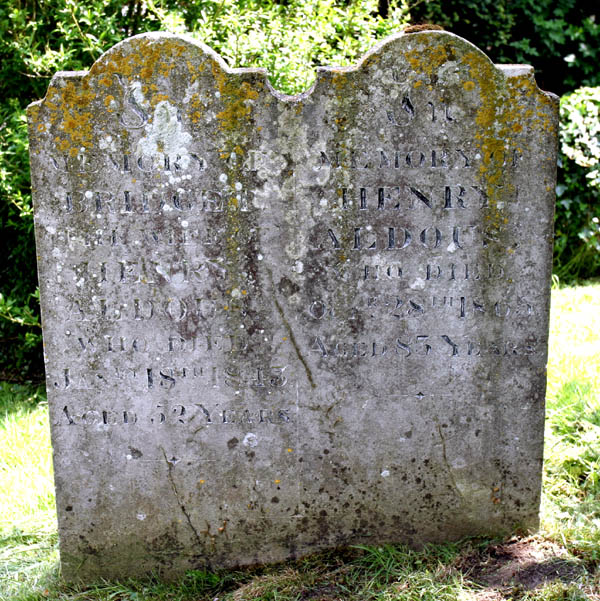
The graveyard surrounding the church has
several headstones bearing the Aldous name.
For
more information on the church visit
www.suffolkchurches.co.uk/fressingfield.htm
|
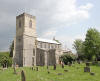
Parish Church of
St. Peter and St. Paul
click image to
enlarge
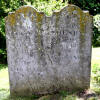
Headstone of a Henry Aldous - d1865
click image to
enlarge
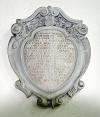
Memorial Plaque
click image to
enlarge |
| Guild Hall |
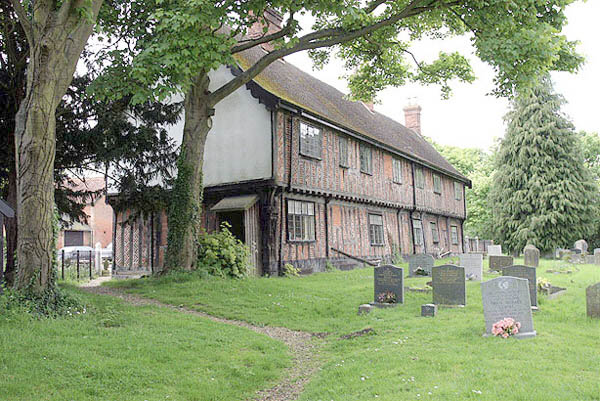
| Now the Fox and
Goose, the Hall of the Guild of St. Margaret of Antioch, was built in 1509.
Following the abolition of the Guilds. A fine example of a brick and
timber building, it became an overflow
for the poorhouse and a school. The building was first used as a public
house in 1710 and became the Fox and Goose in 1791. A modern reference
to the Fox and Goose is a range of frozen 'ready meals' produced by Birds
Eye based on recipes served in the place. |
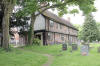
The Fox and Goose
click image to
enlarge |
| Suffolk Agriculture 1750 - 1850 |
|
| Before 1800 this
are of Suffolk had been primarily a dairy farming district, but the
increasing demand for food during and following the Napoleonic Wars prompted
a changeover to arable farming. Suffolk was able to make this change
very quickly because there were no delays caused by enclosure formalities,
these having been in place for some time before the 1760 Enclosure Act.
Pastures were ploughed and wheat grown but difficulties where were on the
horizon. Around 1813 a depression set
in due to falling prices, especially that of corn. The depression
lasted until the late 1830's with many farms having been abandoned with
farmers not being able to pay increasing Poor Rates (equal to one tenth part
of the produce value). At the time, Fressingfield had 140 'able men',
only 30 of these remained in employment.
During these times, the Aldous families had
land in Fressingfield (James Aldous), Stradbroke (Robert Arnold Aldous) and
elsewhere but the Industrial revolution was beginning to attract some groups
to the North West, and in particular the fast developing town of Glossop.
|
|
| |
|
NOTICE
Links page updated.
6/07/06
|
|
| |
|
 |
|
|
|
|
|
|
|
| |
|
|
|
|
| |
|
|
 |
|
|
|